A rear dash cam in an SUV or hatchback needs more than an adhesive mount on the rear glass. The lens must have a useful view, the cable must reach without strain, and the installation must accommodate a hatch that moves. For Maryland drivers arranging professional installation, these details help explain why vehicle body style matters.
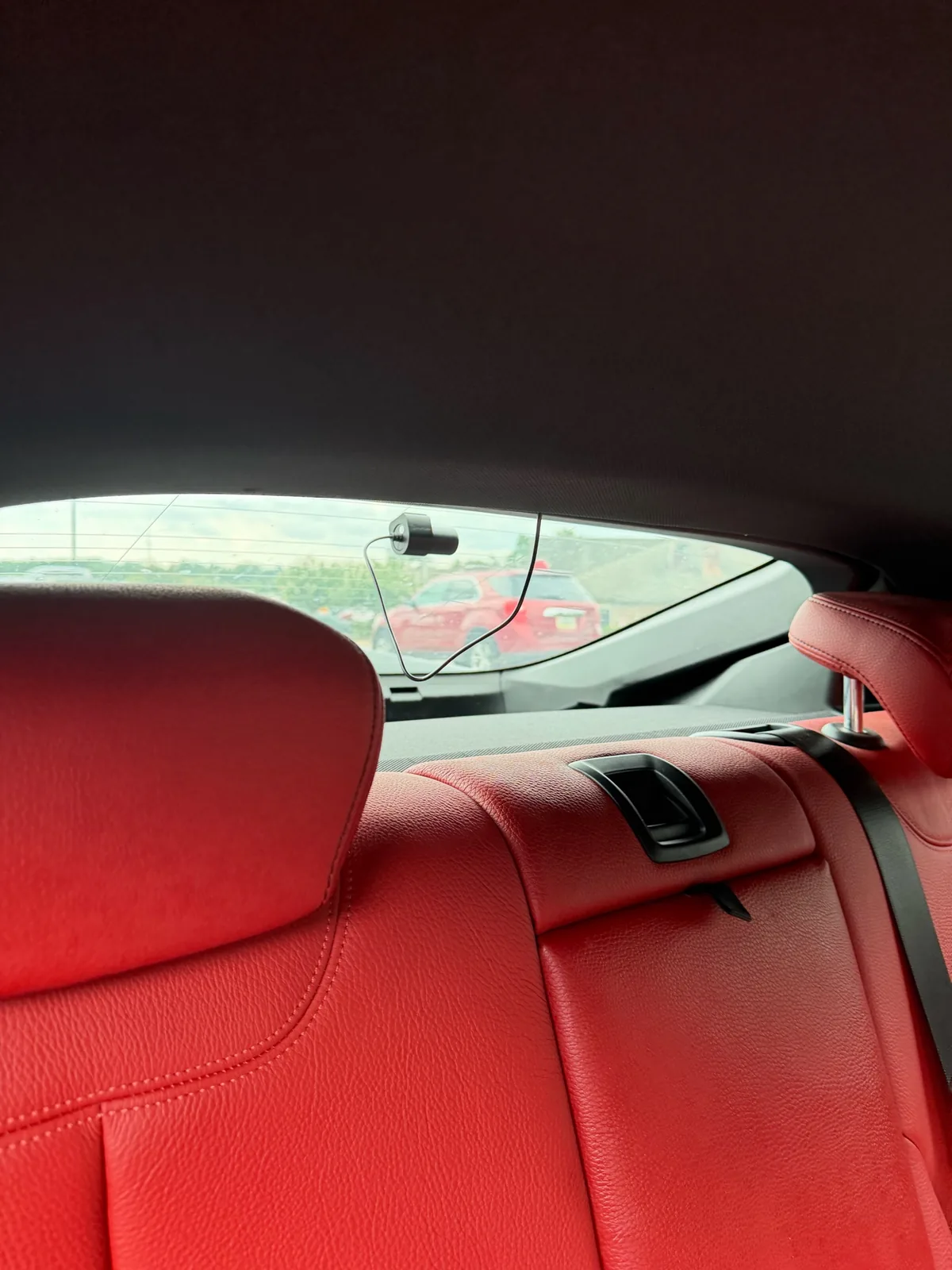
Start with the view through the glass
Check the proposed lens position with the hatch closed, seats in their normal positions and everyday luggage removed from the camera’s sightline. A high position may offer a useful road view, but spoilers, trim, window shape, heating elements and the wiper’s swept area can affect the result. The best position is specific to the vehicle.
Existing tint deserves attention. It can reduce the light reaching the lens, particularly at night, and the mounting surface must be suitable for the adhesive. Do not scrape or cut tint or heating elements to make a camera fit. Ask the installer to explain the proposed position before mounting.
A live preview helps with framing. A saved recording checks the outcome: road coverage, reflections, obstructions and whether the files are actually being written.
A moving hatch changes cable planning
A fixed rear window and a window attached to a moving hatch present different routing problems. The installation needs to accommodate normal opening and closing without pulling on a connector, trapping the cable or leaving an exposed loop where luggage can catch it.
Existing vehicle wiring passages may be relevant, but their suitability and available space require inspection. Do not assume a rubber passage can accept another connector or that cutting it is an acceptable shortcut. Weather sealing, original wiring and trim fit all need to be preserved.
This is a service-planning guide, not a vehicle-specific trim-removal or wiring procedure. Cable routes near restraint systems and other safety equipment must follow appropriate vehicle information. Hiding a wire is not, by itself, proof of a safe route.
Confirm the correct cable before the appointment
Use the cable specified for the exact camera system. Similar connector shapes can conceal differences in wiring or supported camera modules. A cable that was installed for a previous dash cam may not be reusable, and an unapproved extension can create reliability problems.
Tell Auto Tools Mart whether you have a hatchback, SUV, wagon or vehicle with a separately opening rear window. Supply the camera’s full model and the length of the included cable if known. An equipment photo is useful when product listings describe several bundles under one name.
If you already own the hardware, use our customer-supplied camera checklist before booking.
Interior and exterior rear cameras are different choices
An interior camera records through the rear glass. An exterior camera can suit a vehicle where the glass view is unsuitable, but must be specifically rated and installed for that exposure. The camera body’s weather rating does not automatically cover every connector, cable junction or installation method.
Exterior placement adds questions about sealing, cable protection, cleaning and access. It should be selected for a real viewing need, rather than assuming that moving the camera outside always improves evidence. Share the vehicle and intended use before ordering a waterproof-camera bundle.
Request these handover checks
- View a saved rear-camera file with the hatch in its normal closed position.
- Confirm the image is correctly oriented and the road is framed usefully.
- Open and close the hatch normally while checking visible cable slack and trim clearance.
- Confirm the camera continues recording after normal vehicle use; an intermittent connection may need further diagnosis.
- Review a night sample when available, especially through dark tint.
- Learn how to export both front and rear clips from the same incident.
These are checks to discuss for your installation, not claims of recorded test results from the photographed BMW project.
Plan a Maryland installation
Our Glen Burnie BMW installation story shows a documented local project. Your vehicle’s access, equipment and power needs determine its own scope. Read the installation pricing factors before comparing quotes.
Rear-camera questions
Will every SUV need a longer cable?
No. Required length depends on the actual route, connectors and mounting positions, not just vehicle size.
Does a rear wiper guarantee a clean image?
No. The lens must look through a useful area, and dirt, glass condition, tint and reflections still affect video.
Can the rear camera be added later?
Only if the main camera supports the exact rear module and cable. Confirm compatibility before purchasing.
Request a rear-camera installation assessment · 443-204-1972